
Have you ever felt overwhelmed by emotion — or completely numb and far away from yourself? Grounding techniques are gentle, practical tools that, as an EMDR and trauma therapist, I use to help clients feel steady, present, and in control of their emotions.
Join me to discover how you can develop invaluable ways to stay present in stressful or triggering times.

What is Grounding?
Grounding is any activity that helps you manage distress and stay connected to present reality.
Imagine yourself as a tree in a storm. The storm represents difficult feelings or sensations. With strong, deep roots the tree can weather the storm. Grounding can be your roots. Like the tree, you may bend and sway, but grounding helps keep you safely anchored to present reality.
When you understand and practise grounding, it becomes a valuable skill you can use both inside and outside therapy.
Why Grounding is Important in Trauma and EMDR Therapy
If you’ve experienced trauma or had negative life experiences, you can become more sensitive to current life stressors.
Everyday situations can begin to feel threatening, triggering responses like fight, flight, or freeze.
Grounding works by engaging your senses and gently occupying your mind until the ‘storm’ passes.
You can use grounding to:
Support emotional regulation
Manage triggered responses
Increase awareness of emotions
Manage stress and anxiety
Understanding your Window of Tolerance helps you recognise when grounding may be needed.
“Important: Practise grounding when you feel okay so you can use it when you need it most”
Understanding the Window of Tolerance
The ‘Window of Tolerance’ describes your emotional bandwidth (see infographic below). When in this zone you may have strong feelings but things don’t bother you too much.
Trauma or other negative experiences can narrow this window by changing how your body and mind perceive danger. This makes two states more likely:
Hyper-arousal (feeling too much):
anxiety
panic
anger
agitation
Hypo-arousal (feeling too little):
numbness
shutdown
dissociation
withdrawal
In EMDR and trauma therapy, learning to recognise early body signals — like rapid breathing, muscle tension, or reduced eye contact — is a key stabilisation skill that I encourage my clients to master.
👉 Consider: What are your early warning signs that you’re moving outside your window?
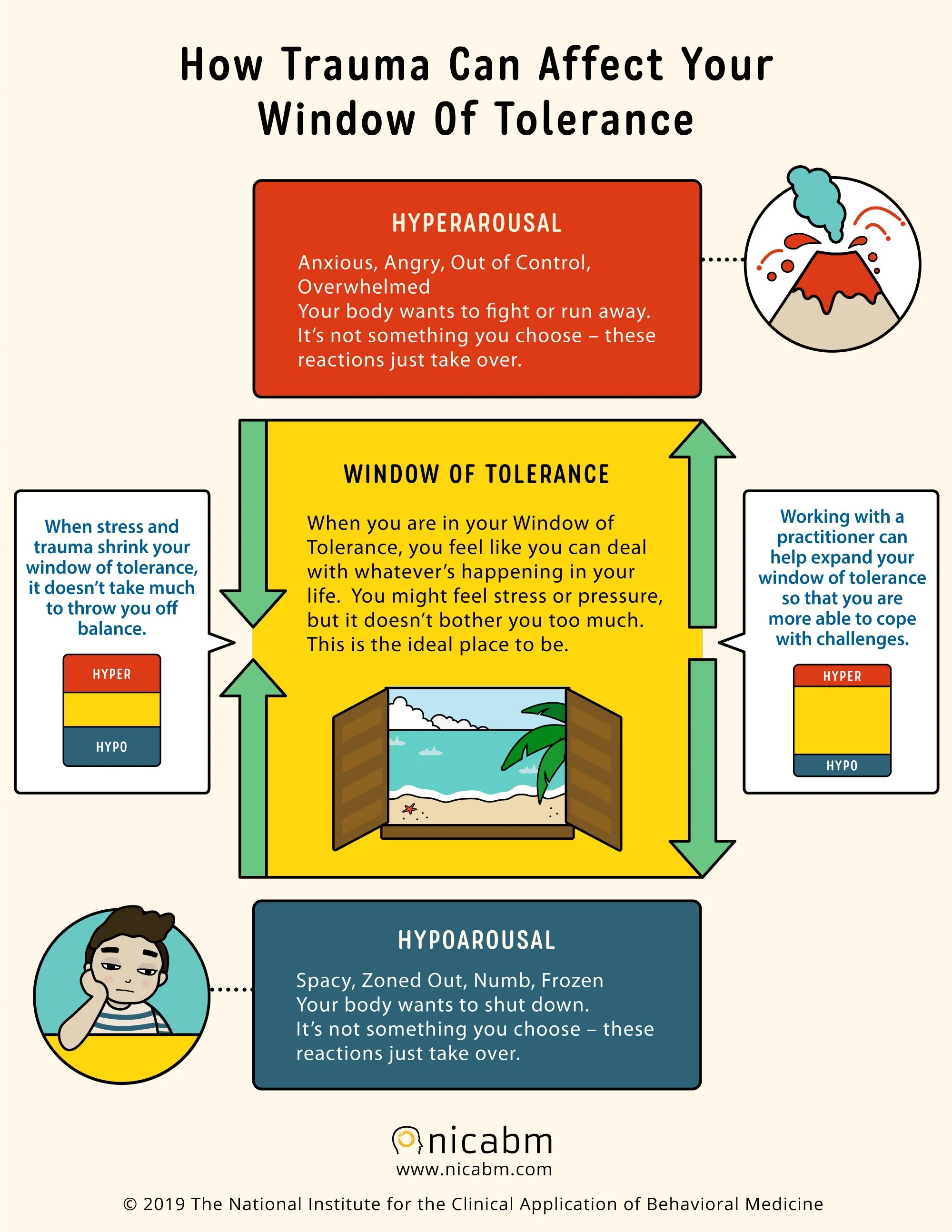
The Window of Tolerance
How to Ground Yourself
Below are practical grounding tools that I commonly use in my trauma and EMDR work.
Sensory grounding techniques
Notice the weight of your body in the chair. Push your body deeper into the chair so that you can feel it holding your weight.
Bring awareness to your feet touching the floor. Slowly press your feet into the floor. Notice how it feels to engage your leg muscles.
Use music intentionally:
soothing music to calm hyper-arousal
energising music (and movement) to lift hypo-arousal
Carry a small grounding object (smooth stone, fidget toy, small plushie) around with you. Notice what happens when you touch it and bring awareness to how it feels.
Orientation grounding techniques
Gently bring awareness to your present environment.
Try asking yourself:
Where am I right now?
What day and year is it?
How old am I?
What season is it?
You can also describe your surroundings in detail. What do you notice around you? Colours, shapes, textures, sounds, smells, temperature. Doing this can send a signal to your mind and body that you’re safe.
Movement grounding techniques
When your body experienced threat in the past, it learned to freeze (hypo-arousal). Movement helps discharge stuck survival energy and can also reduce the excess adrenalin or cortisol that happens in hyper-arousal. Common ones include:
In-the-moment movement:
At school we were told to ‘sit still’ and ‘freezing’ may also be how we survived difficult experiences.
But if you feel fidgety, tune into it. Your body may have excess energy to expel. If you can, go with what your body wants; rock, sway, or just walk around.
Ongoing movement practices:
Regular movement (walking, running, strength training, yoga) helps regulate your nervous system over time and supports long-term emotional wellbeing.
Finally…
Grounding is a simple but powerful way to help your nervous system settle when emotions feel overwhelming or when you start to feel disconnected.
Like any skill, grounding becomes more effective with regular practice and when used early, as you begin to notice your warning signs.
Over time, these small tools can help you feel more present, more in control, and better able to ride out life’s emotional storms.
As an EMDR and trauma therapist, grounding is a key way I help clients to feel more emotionally stable before processing trauma. If you would like to know more feel free to contact me.